Fall Barn Reset: 10 Things to Do Before Cold Weather Arrives
A little work now means a safer, cleaner and cozier barn when winter blows in.
There’s something about those first crisp mornings that makes every cowgirl realize winter isn’t far behind. The horses are growing fuzzy coats, the evenings are getting shorter, and suddenly all those little barn projects we meant to tackle over the summer feel a little more urgent.
Before freezing temperatures, snow, wind and shorter days arrive, give your barn a fall reset. A good weekend spent cleaning, organizing and preparing can make winter chores easier—and help keep your horses comfortable and safe.
Here are 10 things to put on your fall barn checklist.
1. Give the Barn a Deep Cleaning
Start with a good old-fashioned barn cleanout. Sweep aisles, knock down cobwebs, clean tack areas and remove anything that has accumulated over the summer.
Pull out old feed bags, empty containers, broken buckets and equipment you no longer use. Clean underneath storage areas and look for signs of rodents.
A clean barn isn’t just prettier—it makes it much easier to spot problems before winter.
2. Check Water Buckets, Troughs & Heaters
Frozen water can become one of winter’s biggest headaches.
Inspect buckets and troughs for cracks or leaks and clean them thoroughly. If you use heated buckets or tank heaters, inspect cords and equipment before you actually need them.
Make sure horses will have reliable access to fresh, unfrozen water throughout the cold months.
Cowgirl Tip: Don’t wait for the first hard freeze to discover that last year’s tank heater no longer works.
3. Stock the Hay
Take a look at your winter hay supply and storage space. Cold weather can increase a horse’s energy needs, and good-quality forage plays an important role in helping horses maintain body condition and generate heat through digestion.
Store hay somewhere dry and protected from weather, and keep appropriate fire-safety separation between large hay stores and horse areas whenever possible.
Fall is also a good time to talk with your veterinarian or equine nutrition professional about your horse’s winter feeding needs.
4. Inspect Fences & Gates
Walk every fence line before the ground freezes or winter weather makes repairs miserable.
Look for loose boards, damaged posts, sagging wire, broken insulators and gates that don’t latch correctly. Trim back branches that could fall onto fencing during a storm.
Pay special attention to areas around feeding stations where horses tend to congregate.
Ten minutes fixing a loose board in September beats chasing a horse down the road in January.
5. Check Barn Lighting
Shorter days mean more morning and evening chores in the dark.
Replace burned-out bulbs and make sure entrances, aisles, stalls, feed rooms and tack areas are well lit. Check outdoor lighting around gates, parking areas and paths you’ll use during winter.
Good lighting makes chores easier and can help prevent falls and other accidents.
6. Get Blankets Ready
If your horses wear blankets, pull them out before you need them.
Check for torn straps, broken buckles, damaged stitching and worn areas. Wash dirty blankets and make any necessary repairs.
Organize them by horse and weight so you aren’t digging through a giant pile when the temperature suddenly drops.
And remember: not every horse needs a blanket. Coat, body condition, shelter, weather and whether a horse is clipped all factor into that decision.
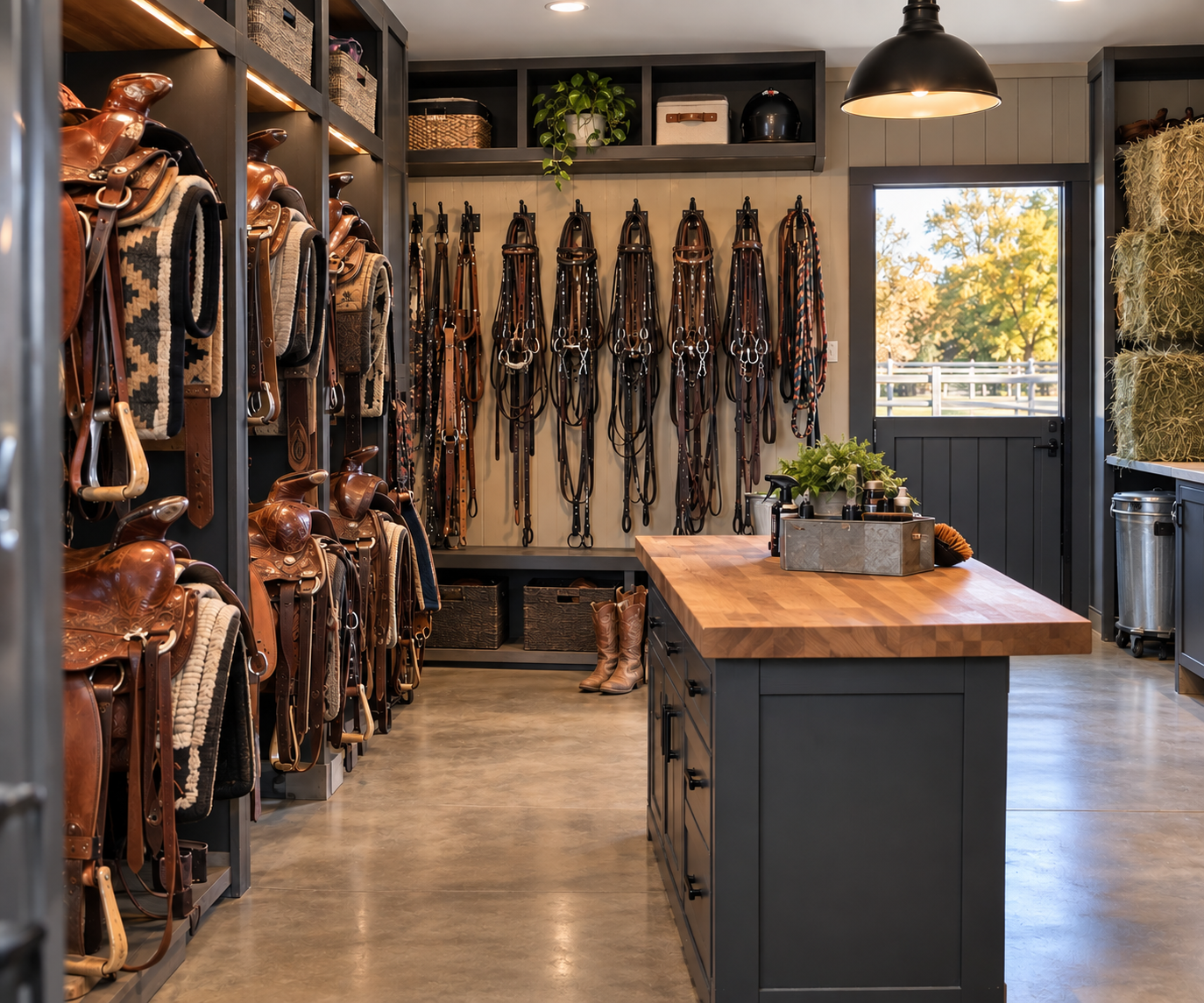
7. Organize the Tack & Feed Room
Fall is the perfect excuse for a tack-room makeover.
Clean and condition leather tack, wash saddle pads and organize grooming supplies. Toss expired products and label bins so everything has a home.
Then tackle the feed room. Clean containers before refilling them and keep feed secured from moisture and pests.
You’ll appreciate the organization when you’re trying to finish chores on a dark, freezing evening.
8. Prepare for Mud
Fall rain followed by winter snow can quickly turn high-traffic areas into a muddy mess.
Pay attention to gates, water troughs, feeding areas, barn entrances and paths between the barn and pasture. Improve drainage where possible and consider an appropriate footing solution for problem areas.
Addressing drainage problems while the weather is still pleasant can save countless muddy boots later.
9. Put Together a Winter Emergency Station
Winter has a way of bringing surprises—power outages, frozen pipes, storms and equipment failures.
Create one easy-to-find area with essentials such as flashlights, fresh batteries, basic first-aid supplies, emergency contact information and other supplies appropriate for your barn.
Know where your water shutoff and electrical panels are located, and keep important veterinarian and farrier numbers readily available.
If you live somewhere that experiences severe winter storms, have a plan for caring for your horses if roads become difficult to travel.
10. Walk the Property Like It’s Already Winter
Finally, grab a jacket and walk your entire property with winter in mind.
Look at it differently.
Where will water collect? Which path could become icy? Are there dead tree limbs hanging over a pasture? Does every horse have access to suitable shelter from wind and precipitation? Can you safely reach the barn after dark?
Those small observations often reveal the projects that matter most.
A Fresh Barn for a Fresh Season
There’s something satisfying about finishing fall barn chores, sweeping the aisle one last time and looking around knowing you’re ready.
The blankets are organized. Hay is stacked. Fences are secure. Water equipment has been checked. Tack is clean.
And the horses?
They’re probably standing at the gate wondering when dinner is coming.
Because no matter how much the seasons change, some barn traditions stay exactly the same.
🍂 FALL BARN RESET CHECKLIST
☐ Deep clean barn and stalls
☐ Check troughs, buckets and heaters
☐ Evaluate winter hay supply
☐ Walk and repair fence lines
☐ Replace barn and outdoor lights
☐ Clean and inspect horse blankets
☐ Organize tack and feed rooms
☐ Prepare muddy/high-traffic areas
☐ Create a winter emergency station
☐ Do a final safety walk around the property
Do it now, and your winter self will thank you later.

- Fall Barn Reset: 10 Things to Do Before Cold Weather Arrives - September 14, 2026
- September in the Saddle: Why Fall Might Be the Best Time to Ride - September 14, 2026
- Introducing American Darling’s New Handbags Just In Time For The NFR - September 8, 2026